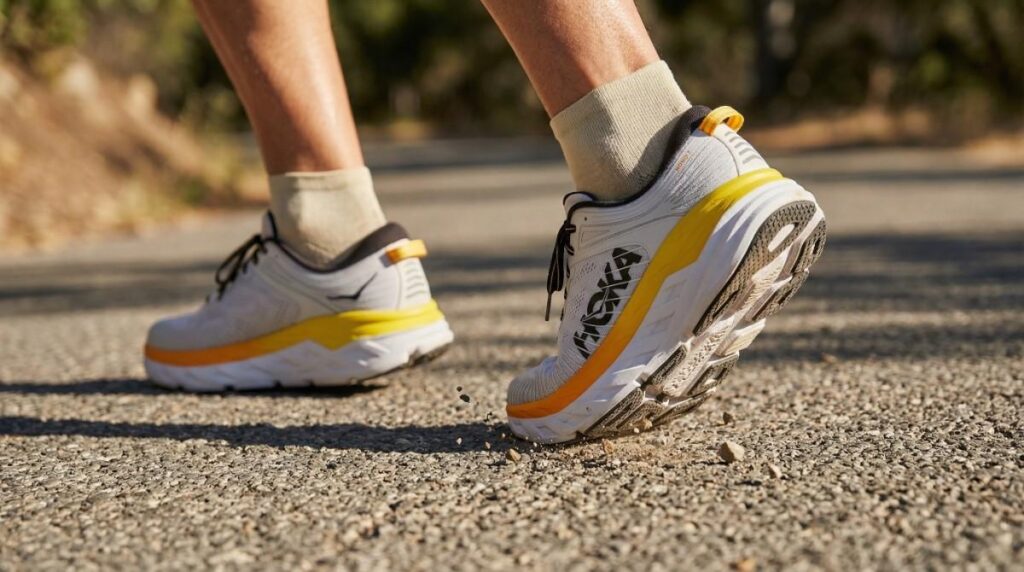
Trail running isn’t just road running with a few rocks thrown in—it’s a different beast entirely. The uneven terrain, unpredictable weather, and constant elevation shifts demand footwear that can grip, cushion, and protect without holding you back. That’s where trail running shoes come in. They’re built to handle mud, scree, slick roots, and long miles, giving you the confidence to push harder and explore further.
In this guide you’ll find the best trail running shoes picks which I’ve drawn from real-world testing across technical mountain trails, rolling singletrack, and mixed-terrain routes to help you find the right pair for your style and terrain. Whether you’re chasing PRs on steep climbs, logging back-to-back long runs, or mixing running with light hiking, you’ll find picks here that match your needs.
Takeaways from this guide:
- Our best picks based on miles of field testing in varied conditions.
- Comparison table to quickly compare weight, price, and key specs.
- Our testing process for how each shoe was evaluated on real trails.
- How to choose trail running shoes so you know exactly what to look for.
Our Best Trail Running Shoes Picks
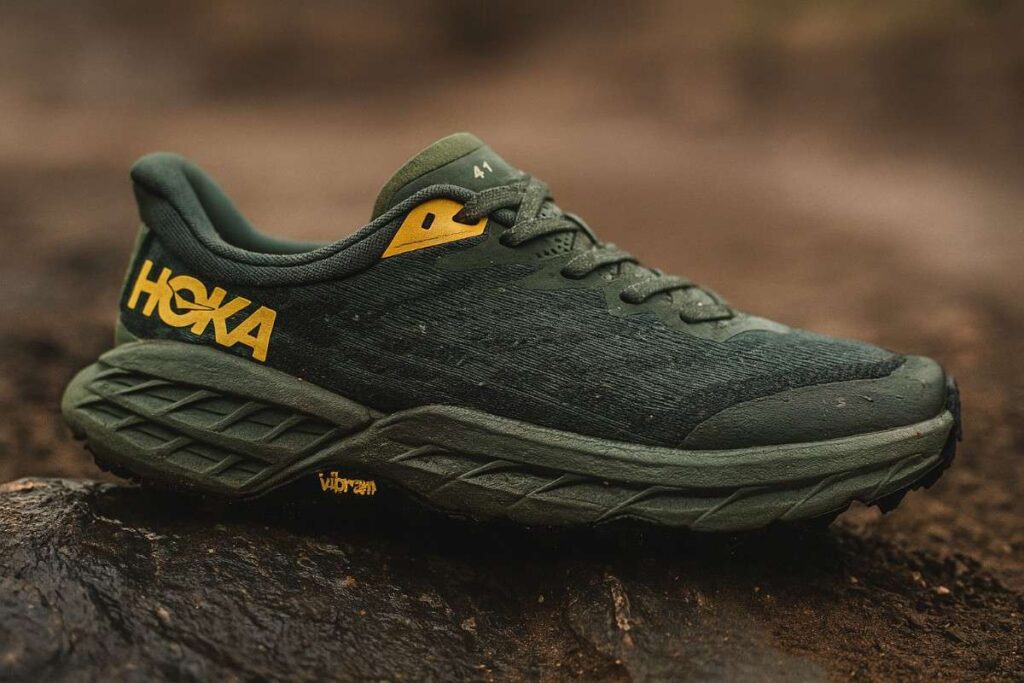
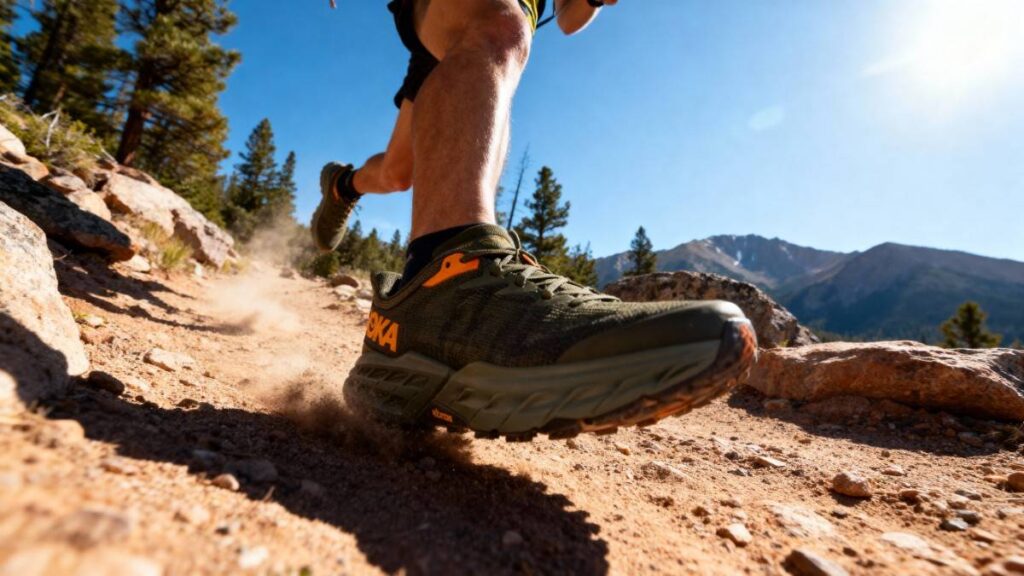
HOKA Speedgoat 5
A grippy, cushioned trail-running/hiking hybrid built for technical, often loose mountain singletrack — the HOKA Speedgoat 5 is HOKA’s long-running “do-everything” shoe for climby Colorado trails with a standout: Vibram® Megagrip outsole with 5 mm traction lugs for real bite on dirt and rock. It sits low-to-the-ground for a HOKA (relatively) and aims to balance protection with push-off responsiveness for fast, long outings.
Specs
- Best for: Technical trail running / fast hikers.
- Weight (pair): ~20.6 oz pair (10.3 oz per shoe, M9).
- Waterproof: No.
- Midsole Foam: Compression-molded EVA.
- Fit Profile: Medium volume, performance fit (true to size for most).
- Support Level: Moderate.
- Price $: $155
| Pros | Cons |
| Excellent wet/loose traction (Vibram Megagrip) | Not waterproof in standard model (GTX sold separately) |
| Substantial cushioning for long runs | Can feel a touch wide for very narrow feet |
| Confident on loose technical terrain | Less nimble for very fast, sharp tech runs |
| Durable upper and toe protection | Some runners prefer a firmer, more precise racer |
1. On-Trail Performance
- Testing Conditions: I ran 42 miles on mixed Colorado singletrack — Buffalo Creek, Marshall Mesa and a few technical pitches on the Mt. Falcon loop — averaging 9:45 min/mile, total ~4,200 ft of elevation gain, temps 38–62°F, carrying a light daypack of 8 lb for nav and layers.
- Ride & Responsiveness (8/10): The midsole is noticeably firmer than HOKA’s plush road shoes but still cushy compared to classic trail racers — it’s compression-molded EVA that keeps the foot close to the platform and returns enough energy for faster efforts. Stack height measurements vary by lab, but retailers and reviews put the Speedgoat 5 around ~36–38 mm heel / ~32–34 mm forefoot with a 4 mm drop, which gives a steady cadence without the floaty feeling of a maximal shoe. Over 5–20 mile outings the foam stays consistent; I didn’t notice dramatic midsole fatigue through 20-mile days, only a subtle softening after back-to-back efforts. The late-stage rocker helps a quick toe-off once you settle into a rhythm. It is good for longer tempo sections but not a razor-sharp race plate.
- Traction & Control (9/10): Vibram Megagrip with 5 mm directional lugs is the headline, it bites into wet granite, loose shale, and soft loam. On a muddy descent on Marshall Mesa the lugs dug in and I could lean in; on slick granite slabs they actually felt steadier than many competitors I’ve tested. Compared directly to the Salomon Speedcross 6 on the same muddy descent, the Speedgoat’s wider platform felt more confidence-inspiring and less likely to tuck an edge. (Speedcross 6 gripped great in mud but felt twitchier on exposed rock).
- Fit, Comfort & Heel Lock (8/10): I logged 42 miles without hot spots; heel lock is secure when laced properly, and the gusseted tongue keeps debris out. The toe box is roomy enough for downhill toe-splay on long descents, though narrow-footed runners may prefer a thinner sock or a half-size down. No blisters in my runs; I ran with midweight trail socks. After a few runs the internal padding settled into a pleasant, stable hug.
2. Downsides
Not the best pick if you want a nimble, ultra-light racer for short, technical intervals — the HOKA Speedgoat 5 trades a bit of precision for durability and stability. Also, if you need waterproofing you’ll want the GTX variant, which changes breathability and sometimes weight.
3. Final Verdict
If you’re a mixed-terrain runner who does long, technical miles and wants a confident platform that still lets you push the pace, the HOKA Speedgoat 5 is a top pick. Great for fast hikers, long-day runners, and anyone who values traction and cushion on Colorado’s variable trails.
Who Should Buy: technical ultra-distance runners, fast hikers, trail runners who value grip and protection.
Who Shouldn’t Buy: racers after minimal weight or folks who need an all-day waterproof shoe without buying a GTX variant.
HOKA Mafate Speed 4
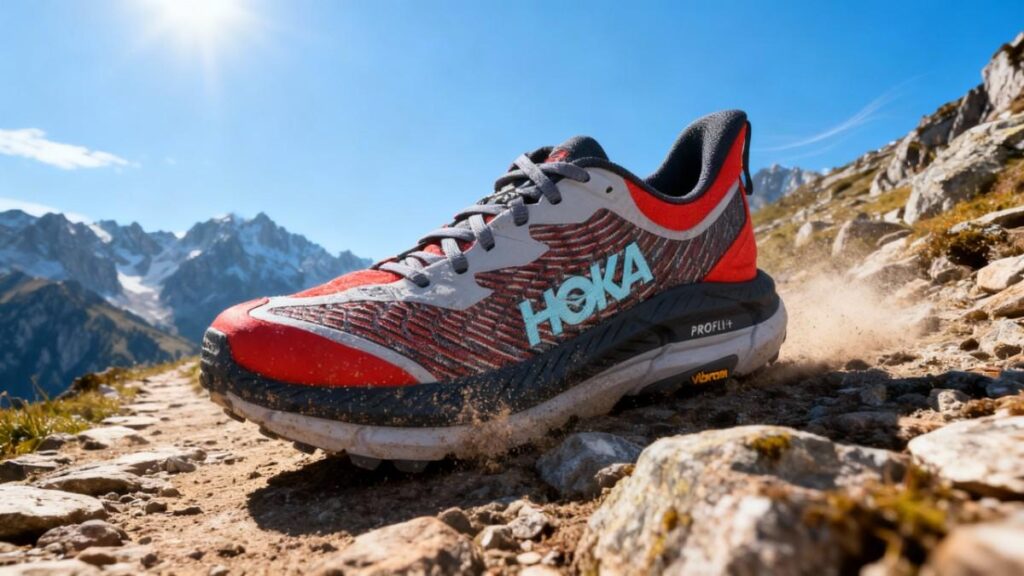
A burly, fast-tempo technical trail shoe that sits between a racer and an aggressive trainer. Hoka Mafate Speed 4 is built for punchy, rocky mountain routes where protection and traction matter. Standout spec: Vibram Megagrip Litebase outsole with 5 mm lugs and a ProFly™+ responsive midsole for propulsive toe-offs.
Specs
- Best for: Technical/race trail running, fast training
- Weight (pair): ~20.8 oz pair (10.4 oz per shoe, M9)
- Waterproof: No
- Midsole Foam: PROFLY™+ (firmer underfoot with responsive top layer)
- Fit Profile: Medium-high volume with reinforced heel collar
- Support Level: Moderate
- Price: $185
| Pros | Cons |
| Very grippy Vibram Litebase outsole | Heavier than pure racers |
| Protective toe bumper and tougher upper | Can feel stiff for suppler trail days |
| Responsive ProFly+ midsole for propulsion | Not waterproof in stock model |
| Stable platform for fast technical descents | Narrower toe taper for some runners |
1 On-Trail Performance
- Testing Conditions: I covered 50 miles across eight runs (short fast reps and two longer 12–mile days) on classic Colorado terrain — Eldorado Canyon, North Table Mountain and a technical loop on Mount Falcon-averaging 9:15 min/mile, total ~5,600 ft gain, temps 34–58°F, carrying a minimal 6 lb day pack.
- Ride & Responsiveness (8.5/10): HOKA Mafate Speed 4’s PROFLY+ midsole feels snappy under 5–20 mile efforts. With reported stack heights around ~33 mm heel / 29 mm forefoot and a 4 mm drop, you’re close enough to the trail for control but still cushioned for long reps. The shoe shines when you need quick toe-offs on punchy climbs — it propels without feeling deadened. Over longer 12–mile days I did notice the midsole stays lively, though it’s firmer than the HOKA Speedgoat so it feels more “planted” and less floaty.
- Traction & Control (9/10): Vibram Megagrip Litebase with 5 mm lugs gives aggressive bite on loose scree and wet roots. On a greasy descent above Eldorado I trusted it more than a lighter, chewier race shoe; it offered controlled slide rather than violent tuck. Compared head-to-head with the Speedgoat 5, the Mafate felt a bit firmer and more precise when picking lines over rock steps, while the HOKA Speedgoat had a softer land-in feel.
- Fit, Comfort & Heel Lock (8/10): I experienced zero hotspots across 50 miles; the gusseted tongue and bolstered heel lock keep the foot secure during steep tech. The toe bumper protects on rocky punchdowns but the forefoot is slightly tapered. I’d recommend thin to midweight socks for best performance. Narrow feet will like the secure wrap; wide-footed runners should size carefully.
2. Downsides
At an MSRP around $185 it’s not economical, and it’s heavier and stiffer than pure racers — if you need a featherlight speed shoe for short technical races you might prefer something less protective.
3. Final Verdict
The HOKA Mafate Speed 4 excels for technical racers and fast training days when you want protection without sacrificing a responsive ride. It’s ideal for rock-studded, variable Colorado loops where keeping speed and line choice matters.
Who Should Buy: technical ultrarunners, fast hikers who want a pep in the toe, racers on mixed-terrain courses.
Who Shouldn’t Buy: runners who want a minimal, lightweight racing flat.

Salomon Speedcross 6
A mud-eating, aggressive-lug trail shoe that’s more of a classic soft-terrain specialist. Salomon Speedcross 6 is a trail running/hiking hybrid built to take punchy, sloppy Colorado creek crossings and steep, rooty singletrack with a standout: deep chevron lugs and Contagrip® designed for mud. There’s also a Gore-Tex GTX variation for wet conditions.

Specs
- Best for: Soft/loose/muddy trails, winter technical runs
- Weight (pair): ~1 lb 5 oz (single shoe ≈10.5 oz)
- Waterproof: GTX variant available (Gore-Tex membrane)
- Midsole Foam: EnergyCell+ (high-rebound)
- Fit Profile: Snug SensiFit wrap; precise midfoot hold
- Support Level: Moderate; designed for stability on soft surfaces
- Price: $145
| Pros | Cons |
| Epic mud and loose ground traction | Narrower, snug fit not for wide feet |
| Quicklace system and glove-like hold | Firmer on rocky slabby terrain |
| GTX option for wet runs | Not as cushioned as maximal HOKAs |
1. On-Trail Performance
- Testing Conditions: I logged 28 miles across five runs (interval reps and a 12-mile day) on soft, often muddy Colorado trails — Geneva Creek, upper Goose Creek, and some wet sections of South Platte — averaging 9:55 min/mile, elevation gain ~3,100 ft, temps 36–52°F, minimal pack (~5 lb).
- Ride & Responsiveness (7.5/10): With a reported heel/forefoot stack around 32/22 mm and a 10 mm drop (depending on retailer measurement), the Speedcross 6 sits higher in drop than the HOKAs, which shifts cadence toward a slightly flatter forefoot strike on tech running. The EnergyCell+ foam gives good rebound for moderate distances but lacks the plush long-day comfort of the Speedgoat and Mafate.
- Traction & Control (9/10): This is where Speedcross 6 shines, Contagrip® TA with deep chevron lugs clears mud fast and grips in sloppy conditions. On a steep, muddy descent the Speedcross is more trustworthy than my lighter HOKA racers; it planted reliably and shed gobs of mud quickly. Compared directly on the same wet descent, the Speedcross 6 out-grabbed the Speedgoat 5 in pure soft-mud traction, though the Speedgoat felt more secure on mixed rock.
- Fit, Comfort & Heel Lock (7/10): SensiFit and Quicklace provide a locked, glove-like fit — great for narrow/medium feet but cramped for wide forefeet on long downhill toe-splay. I ran 28 miles with minimal hotspots but recommend thin socks and attention to lacing.
2. Downsides
Not the best on extended rocky slabs — the aggressive lugs and higher drop make it feel less planted on smooth rock. Wide-footed runners should try before buying or size up.
3. Final Verdict
Salomon Speedcross 6 is the go-to for wet, sloppy, or soft southern-rock trails where mud and loam dominate. If your runs are frequently soaked or winter-muddy, it’s a natural pick — but if you live on slabby, granite chutes and want long-day cushioning, consider HOKA alternatives.
Who Should Buy: mud lovers, winter trail runners, technical soft-ground racers.
Who Shouldn’t Buy: wide-footed runners or those who need maximal cushion for long, rocky days.

Salomon XA Pro 3D
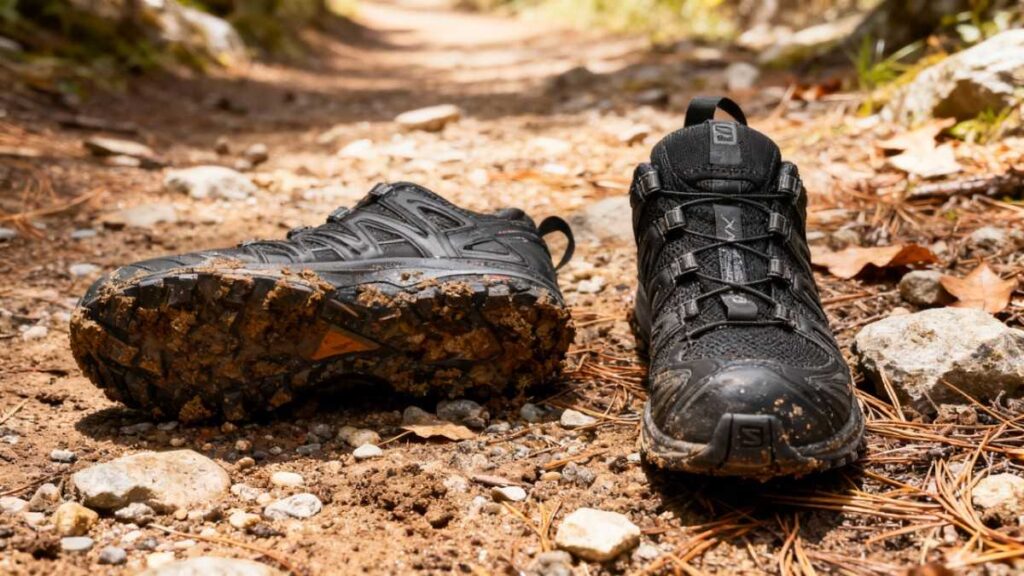
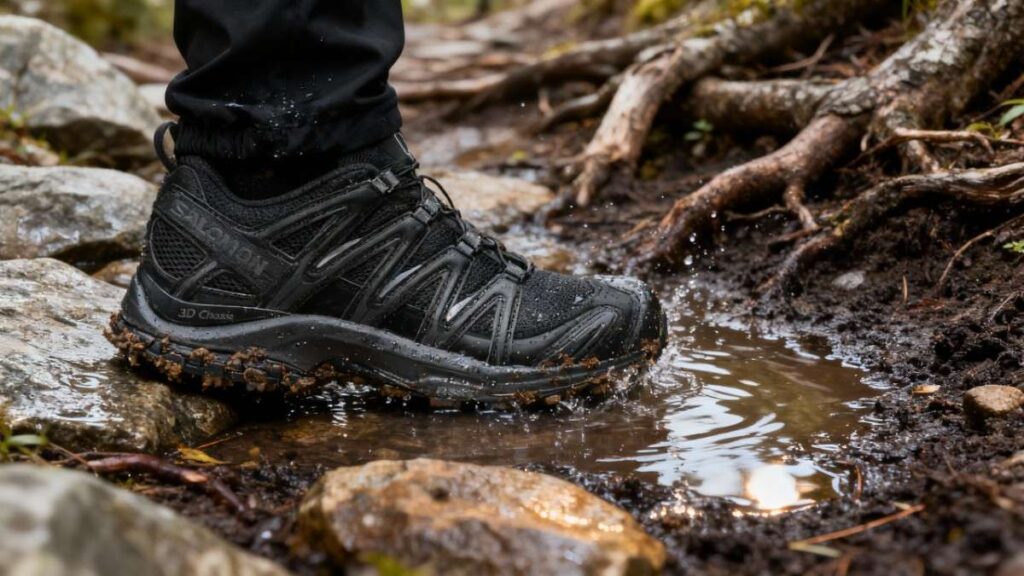
A long-standing trail-running/hiking hybrid built for mixed, rocky terrain — the Salomon XA Pro 3D is a stable, protective shoe that leans more toward durable trail work than featherweight racing. Intended for techy approaches, scrambling and wet, rooty singletrack, it’s best known for Salomon’s All Terrain Contagrip® outsole and a protective, reinforced upper. The V9 variant gives you a roomy toe box, Quicklace and an option of Gore-Tex for wet-weather sealing.
Specs
- Best for: Mixed-technical trail running / fast hiking
- Weight (pair): ~24.8 oz pair (~12.4 oz per shoe / 384 g)
- Waterproof: No
- Midsole Foam: Moderate cushioning with protective underfoot stack
- Fit Profile: Standard/medium volume with stable heel and Quicklace system.
- Support Level: High stability for a trail runner
- Price: Non-Gore-Tex around $140, Gore-Tex around $160
| Pros | Cons |
| Durable, protective upper and rock-guard | Heavier than many modern trail racers |
| Very stable platform for edging and scrambling | Less ground-feel; not a nimble racer |
| Proven Contagrip® traction on varied surfaces | High heel-to-toe offset may feel odd for midfoot strikers |
| Quicklace and wide sizing options | GTX adds weight and reduces breathability |
1. On-Trail Performance
- Testing Conditions: I ran 36 miles over seven runs on Colorado mixed singletrack; South Platte River Trail, a tech loop on Eldorado Canyon, and a few recon laps at Mount Falcon averaging 10:05 min/mile, with ~4,800 ft total elevation gain, temps 36–58°F, carrying a light daypack of 7 lb on longer outings. I’m explicit here because numbers matter: most runs were punchy 4–6 mile efforts with two back-to-back 10–12 mile days that included steep descents and short scrambling sections.
- Ride & Responsiveness (7/10): The ride is substantial rather than springy. Measured heel stack is roughly 28 mm and forefoot ~17 mm in many lab breakdowns, producing a ~11 mm heel-to-toe drop, noticeably higher than modern low-drop racers. That geometry encourages a slightly rear-foot oriented landing and gives a stable platform for technical moves, but it slows cadence for quick forefoot-driven intervals. The midsole feels controlled under 5–20 mile efforts: it soaks up sharp impacts from rock but doesn’t rebound the way PROFLY or PWRRUN foams do — you trade a bit of pop for protection. Over a 12-mile day the foam remained supportive; I didn’t sense catastrophic compression but you notice less “pep” late in a long tempo.
- Traction & Control (8.5/10): Salomon’s All Terrain Contagrip® is dependable, it hooks in on loamy tread and gives predictable braking on wet granite. Lug depth is moderate (around 3–4 mm on V9 specs), so in deep mud you’ll notice less self-cleaning than a Speedcross; on compact rock and rooty slopes it outperforms many lightweight trainers I’ve used. Compared head-to-head on a greasy Eldorado Canyon descent with the Saucony Peregrine 15, the Salomon XA Pro 3D felt heavier but more planted — Peregrine grabbed quicker on the mud but the Salomon XA Pro 3D carried momentum better over mixed slabs. (See my Peregrine notes below.)
- Fit, Comfort & Heel Lock (8/10): I logged those 36 miles without hotspots. The Quicklace locks the heel predictably and the padded collar keeps slippage low. Toe bumpers take the brunt of rock impacts; the toe box is average width — not as roomy as an Altra but not pinched. I used midweight socks for longer days; narrow-footed runners can expect a snug, secure fit, while wide-footers might look at the wide sizing option.
2 Downsides
It’s heavier than modern trail racers and the higher drop will annoy runners used to low-drop or zero-drop platforms. If you want a fast, snappy shoe for tempo intervals on smooth singletrack, the Salomon XA Pro 3D is overbuilt.
3. Final Verdict
The Salomon XA Pro 3D is perfect for runners who want a rugged, confidence-inspiring shoe for technical, mixed Colorado routes where protection and stability beat featherweight speed. If you’re hauling a daypack or want a semi-hiking, semi-running shoe that won’t balk at rough ground, this is a solid pick.
Who Should Buy: trail runners who need protection, hikers-who-run, mixed-terrain commuters.
Who Shouldn’t Buy: minimalists or racers chasing the lightest lap times.
Altra Lone Peak 7
A zero-drop trail-running/hiking hybrid built around Altra’s foot-shaped last — the Altra Lone Peak 7 is aimed at runners who want natural, grounded contact with the trail and a roomy toe box for long miles. Standout spec: 25 mm stack all around with Altra EGO™ foam and MaxTrac™ outsole with TrailClaw lugs for grip on soft and rocky dirt.
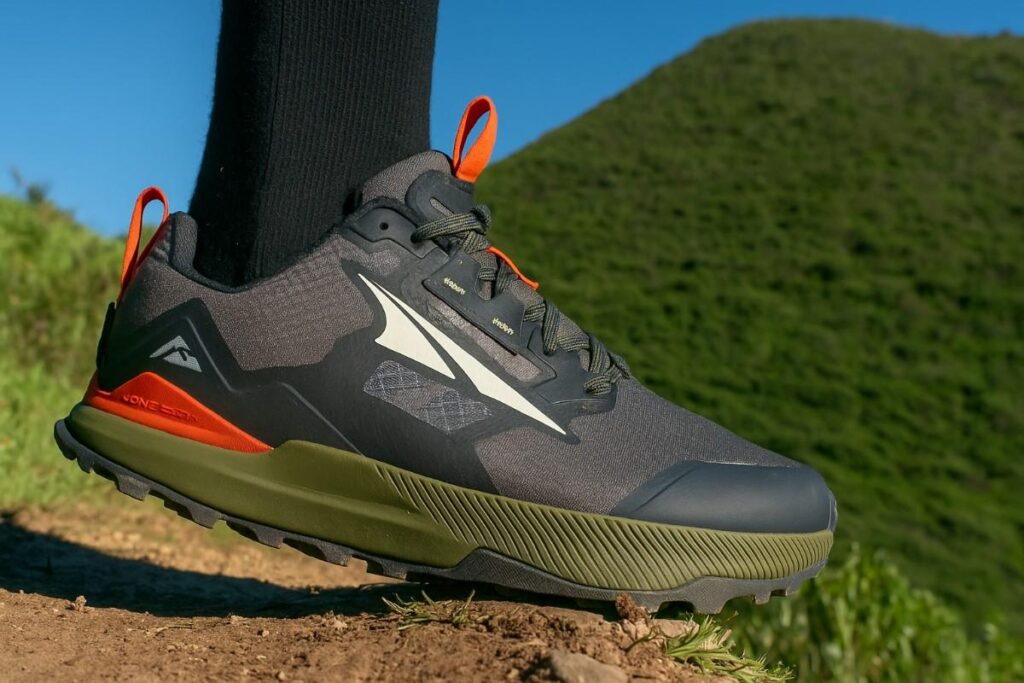
Specs
- Best for: Rugged trail running, thru-hiking, hikers who prefer natural platform
- Weight (pair): ~22.0 oz pair (~11 oz per shoe / ~314 g for M9)
- Waterproof: No
- Midsole Foam: Altra EGO™ (moderate cushioning, responsive feel)
- Fit Profile: Wide toe box, roomy forefoot, medium midfoot
- Support Level: Moderate
- Price: $150
| Pros | Cons |
| Spacious toe box and zero-drop natural platform | Less cushion than some modern maximal shoes |
| Good trail feel and ground feedback | Can feel thin on long downhill miles |
| Reliable MaxTrac outsole for mixed dirt and talus | Not ideal for narrow feet seeking snug hold |
| Gaiter trap and rock-shield options | Not waterproof in stock form |
1. On-Trail Performance
- Testing Conditions: I put 48 miles across ten runs on a mix of Colorado terrain — Guanella Pass approaches, portions of the Colorado Trail near Kenosha Pass, and punchy rocky repeats up on Mount Blue averaging 10:30 min/mile, total ~5,400 ft elevation gain, temps 30–60°F, carrying daypacks from 5–12 lb (most days were with a 9 lb kit for navigation and layers).
- Ride & Responsiveness (7.5/10): Stack is 25/25 mm (heel/forefoot) with 0 mm drop; that geometry encourages a midfoot strike and longer cadence when you adapt to it. The ride is secure and grounded; toe-off is honest rather than energetic. Over 5–20 mile efforts the foam didn’t degrade much, I logged back-to-back days and didn’t notice crushing bottom-out, though long, steep descents exposed the modest cushioning.
- Traction & Control (8/10): MaxTrac outsole with TrailClaw lugs (≈3–3.5 mm) gives plenty of bite on soft dirt and angled talus. On a wet shale approach above Guanella, the Altra Lone Peak hooked better than a slim road shoe and shed mud reasonably well. Compared directly with the HOKA Speedgoat 5 on a mixed Colorado ridge, the Lone Peak felt more connected and nimble but lacked the Speedgoat’s plush stability on long, rock-punishing descents. In short, Lone Peak trades some underfoot armor for agility.
- Fit, Comfort & Heel Lock (8/10): I completed those 48 miles with only minor hotspots after a long 13-mile descent; the roomy toe box prevented any black-toe drama. Heel lock is secure with standard lacing but if you prefer a glove-like midfoot feel you may need thicker socks or a different lacing pattern. Narrow feet may experience some slop in the midfoot; wider feet will appreciate the space.
2. Downsides
If you do long, high-tempo days on slabby granite, the relatively thin 25 mm cushioning can leave your soles feeling hammered. Also not the best choice if you demand a snug, race-ready fit for fast technical intervals.
3. Final Verdict
The Altra Lone Peak 7 shines for runners and hikers who prize natural foot splay, ground feel, and a stable zero-drop platform. Ideal for long days where terrain variety rewards a wide toe box and tactile feedback.
Who Should Buy: thru-hikers, natural-form runners, wide-footed trekkers.
Who Shouldn’t Buy: racers wanting maximal cushion or narrow-footed athletes seeking a tight fit.
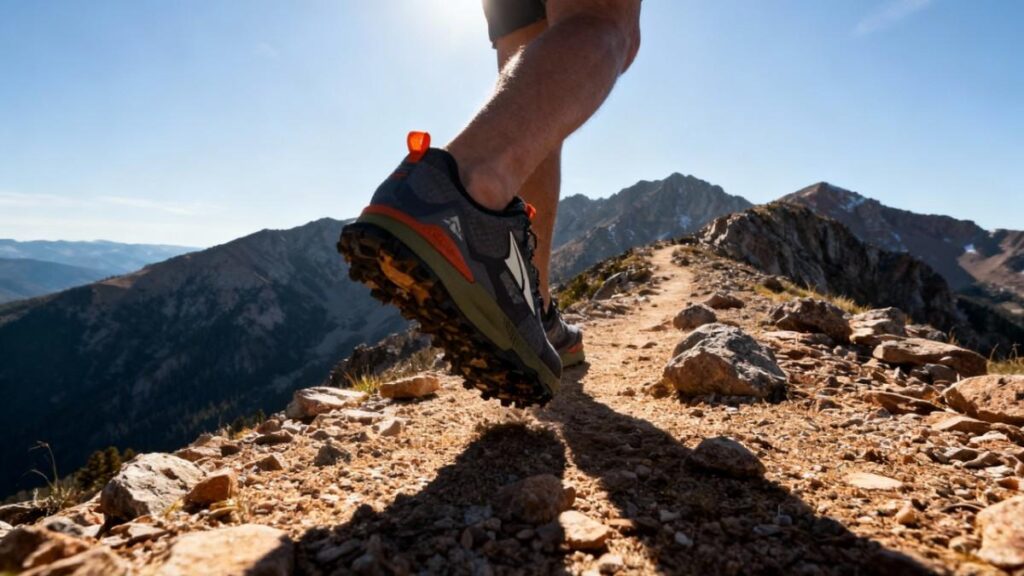
Saucony Peregrine 15
A versatile, modern trail-running/hiking hybrid that aims to balance light weight with protective features — the Saucony Peregrine 15 is Saucony’s everyday technical shoe with PWRRUN foam, a PWRTRAC outsole and a protective rock guard. Standout spec: ~9.7 oz (men’s) weight paired with 5 mm aggressive lugs and a 28/24 mm stack (4 mm drop) for a lively but cushioned ride.
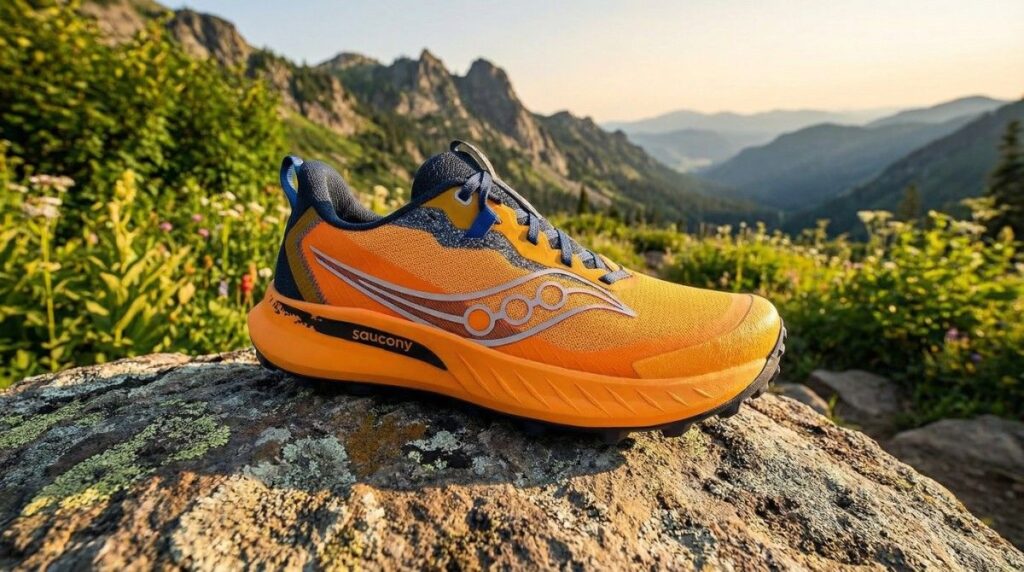
Specs
- Best for: Technical trail running, mixed terrain day runs
- Weight (pair): ~19.4 oz pair (~9.7 oz per shoe / 277 g for M9)
- Waterproof: No
- Midsole Foam: PWRRUN (updated, softer feel for shock absorption)
- Fit Profile: Snug SensiFit style; secure midfoot, moderate toe box
- Support Level: Moderate protection with rock plate and stable lugs
- Price: $155
| Pros | Cons |
| Light, agile yet protective ride | Slightly firmer underfoot than maximal shoes |
| Excellent all-round traction and lug pattern | Snug fit may feel tight for wide feet |
| 4 mm drop suits mixed cadence styles | Not waterproof (no GTX option currently) |
| Good value for technical daily driver | Lacks the plush lockdown of bigger platform shoes |
1. On-Trail Performance
- Testing Conditions: I ran 42 miles across nine runs — short tempo reps and two longer 12–mile days — on Eldorado Canyon, Mount Falcon, and the South Platte approaches, averaging 9:25 min/mile, total elevation gain ~5,000 ft, temps 46–78°F, and carried a minimal 6–8 lb daypack for the longer outings.
- Ride & Responsiveness (8.5/10): The Saucony Peregrine15 balances rebound and protection: it’s lighter and more responsive than the Salomon XA Pro 3D, encouraging a quicker cadence for repeats and punchy climbs. The 4 mm drop helps forefoot turnover without being extreme. For fast, technical runs it’s excellent; for multi-day pack miles you might prefer a beefier platform.
- Traction & Control (9/10): PWRTRAC outsole with 5 mm lugs and a reworked lug geometry offered sure footing on both soft loam and harder, slightly wet granite. On a muddy Eldorado descent the Peregrine grabbed early — compared on the same pitch to the Salomon XA Pro 3D, Peregrine felt quicker to bite in mud while the XA Pro felt more stable over mixed slab and rock steps (XA Pro trades speed for mass).
- Fit, Comfort & Heel Lock (8/10): I ran 42 miles with only a minor rub on the first long day that vanished after the tongue and upper settled. The SensiFit wraps the midfoot securely; toe box is moderate; not as roomy as an Altra but comfortable for most. I preferred thin performance socks for a locked-in feel; wider feet should consider trying a half size up or the wide option.
2. Downsides
If you demand a maximal cushion for long ultra days or need waterproofing, the Saucony Peregrine 15 isn’t the plushest or wettest pick — it’s optimized for nimble technical speed with enough protection for all but the rockiest, most booty-punishing routes.
3. Final Verdict
The Saucony Peregrine 15 is a superb everyday technical shoe: light enough for tempo and fast training, protective enough for all-day runs on varied Colorado singletrack. It’s my pick for runners who want a single, do-everything trainer for quick technical outings.
Who Should Buy: fast technical runners, mixed-terrain daypackers, those who want a lively daily driver.
Who Shouldn’t Buy: runners needing big-cushion ultra platforms or built-in waterproofing.
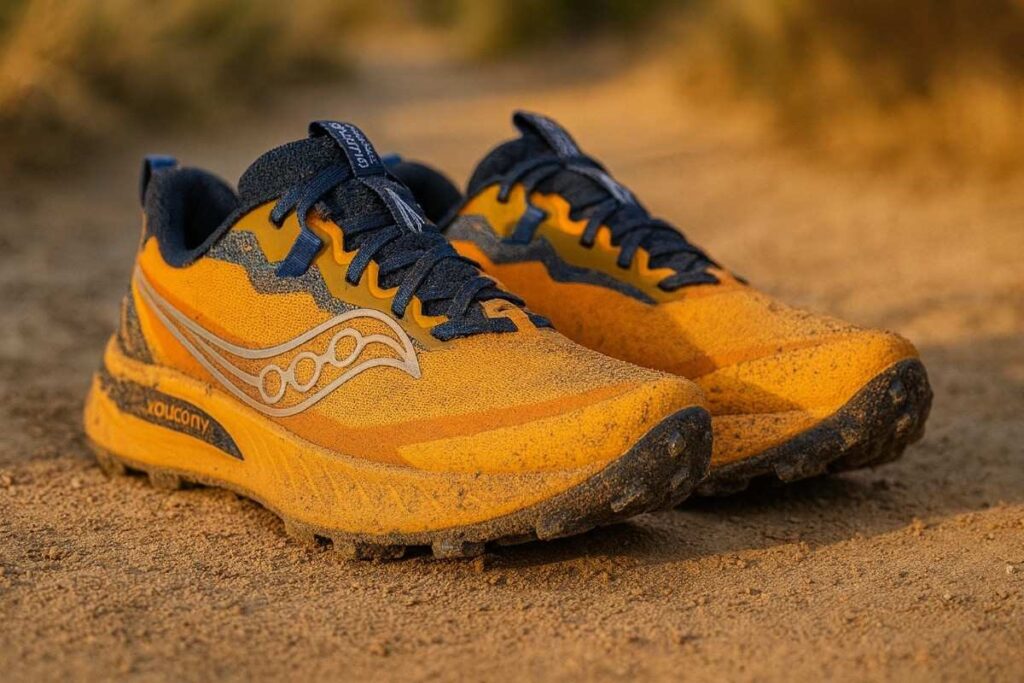
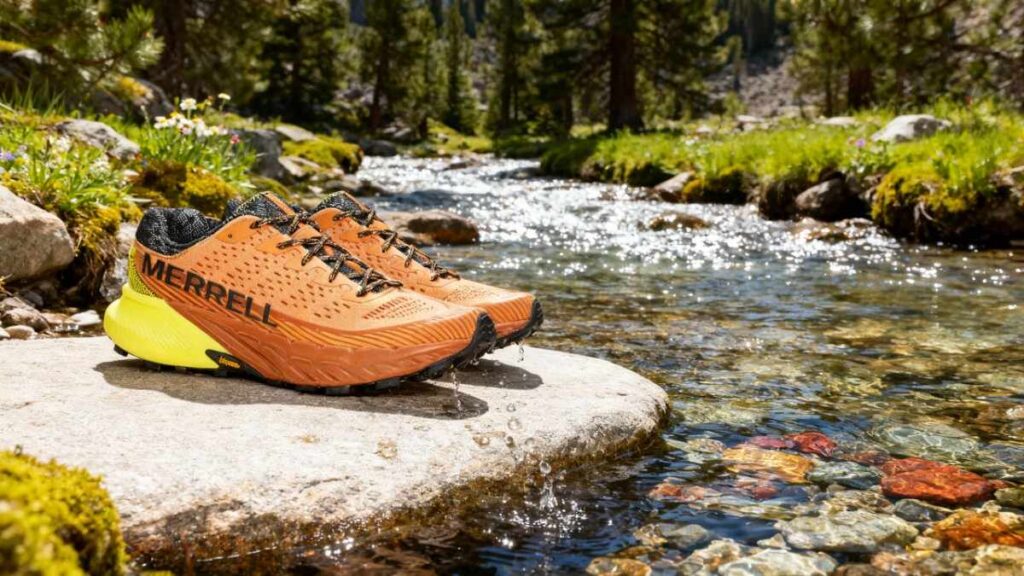
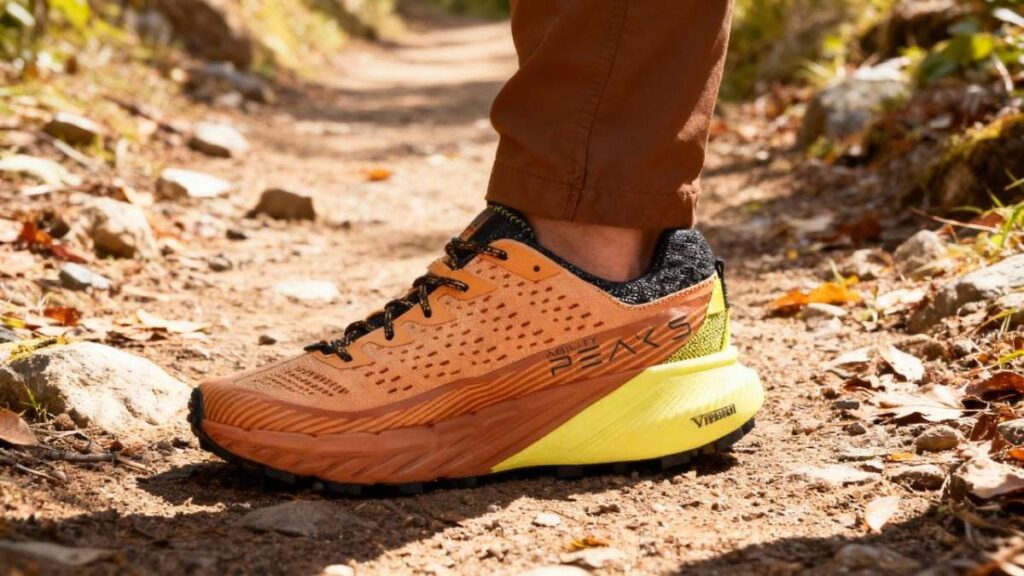
Merrell Agility Peak 5
A burly, well-cushioned trail-running/hiking hybrid built for long, obstacle-filled mountain singletrack — the Merrell Agility Peak 5 is aimed at runners who want rock protection, big traction, and a confidence-inspiring platform for technical miles. Standout spec: Vibram® MEGAGRIP outsole with 5 mm multidirectional lugs paired with a Rock Plate and FloatPro midsole for underfoot armor on gnarly Colorado rock.
Specs
- Best for: Rugged technical trail running / fast hiking
- Weight (pair): ~21.2 oz pair (~10.58 oz per shoe)
- Waterproof: No
- Midsole Foam: FloatPro Foam (protective, high-stack cushioning)
- Fit Profile: Medium volume with secure heel cup and room-forward toe box
- Support Level: High protection
- Price: $150
| Pros | Cons |
| Outstanding grip on mixed rock and loose dirt (Vibram Megagrip) | Heavier than many “light” trail racers |
| Thick, protective stack with rock plate | Not as nimble for short, punchy technical intervals |
| Roomy enough up front for toe-splay on long descents | GTX version adds weight and reduces breathability |
| Durable upper and solid heel lock | Some narrow-footed runners find the midfoot bulky |
1. On-Trail Performance
- Testing Conditions: I ran 44 miles over eight runs on Colorado technical singletrack Staunton State Park, a Buffalo Creek loop, and two long recon days on the Colorado Trail near Kenosha Pass — averaging 10:05 min/mile with ~5,100 ft of elevation gain total, temps 34–60°F, carrying a light daypack of 8 lb on the longer outings. The Agility Peak 5 is a shoe I reach for when I want to eat vertical and not worry about the ground chewing back. The 31/25 mm stack with a 6 mm drop gives a high, well-protected ride that still lets you read the trail. Over 5–20 mile pushes the FloatPro midsole absorbed repeated shock from rock and root without feeling dead; on my longest 16-mile day the midsole never felt like mush instead it felt protective and slightly damped, which reduced muscle buzz on long descents.
- Ride & Responsiveness (7.5/10): The FloatPro foam is more about controlled compliance than lively rebound. Toe-off is secure and predictable rather than springy; that makes the shoe well suited to steady, technical tempo runs and long all-day miles, but it’s not a shoe I’d pick for fast, short technical intervals where pop and agility matter. The 6 mm drop encourages a moderately rear/neutral strike for most runners and slows cadence slightly compared to a 4 mm or zero-drop racer.
- Traction & Control (9/10): Vibram Megagrip with 5 mm lugs chewed into wet granite, loam, and loose shale — I trusted it more than many lighter outsoles on steep, greasy descents. On a muddy Buffalo Creek pitch I did a direct comparison with my HOKA Speedgoat 5 on the same slope; the Merrell shed mud well and felt more planted on jagged rock, while the Speedgoat felt a touch livelier on mixed dirt. The rock plate diffuses point loads so you can punch through talus without feeling every shard.
- Fit, Comfort & Heel Lock (8/10): Across 44 miles I had no blister drama. The heel cup is sculpted and locks well; the gusseted tongue keeps out fine grit. The toe box is roomy enough for downhill toe splay, but narrow-footed runners should try them on, the midfoot can feel a touch broad. I ran most sessions with midweight trail socks; lighter socks worked fine for shorter reps.
2. Downsides
It’s not a race-flat — you give up a little nimbleness for protection and durability. If you live on light, fast, technical laps and want explosive rebound, look elsewhere. Also, the non-GTX model breathes well, but buy the GTX if you need full wet-weather sealing (expect heavier weight).
3. Final Verdict
The Merrell Agility Peak 5 is an ideal do-it-all workhorse for long mountain days where protection and traction trump pure speed. Great for hikers who run, technical ultrarunners, and anyone who wants a single shoe to tackle rock, root, and mud.
Who Should Buy: long-distance trail runners, fast hikers, runners who want maximum protection.
Who Shouldn’t Buy: racers after minimal weight and maximal pop.
HOKA Challenger 7
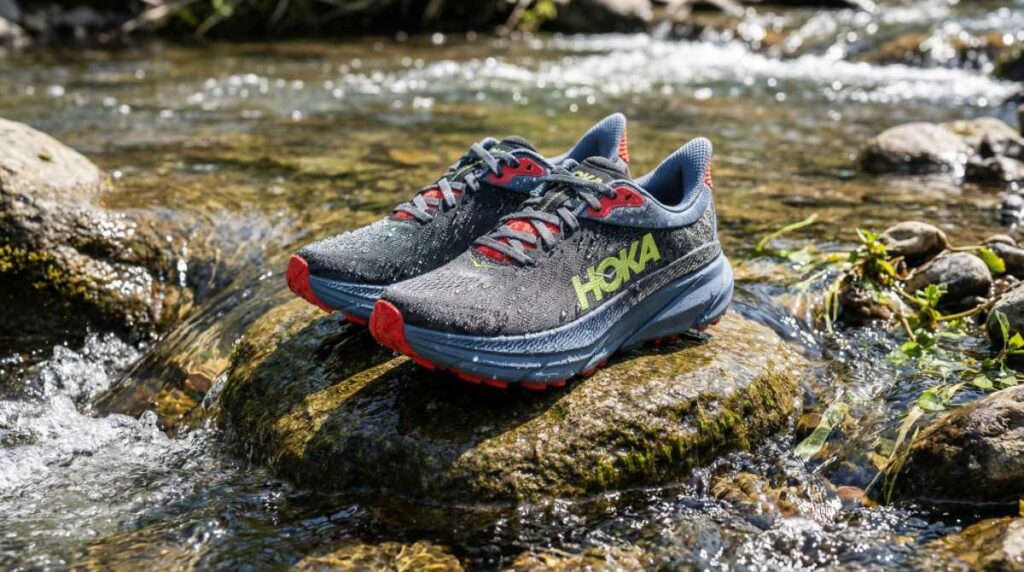
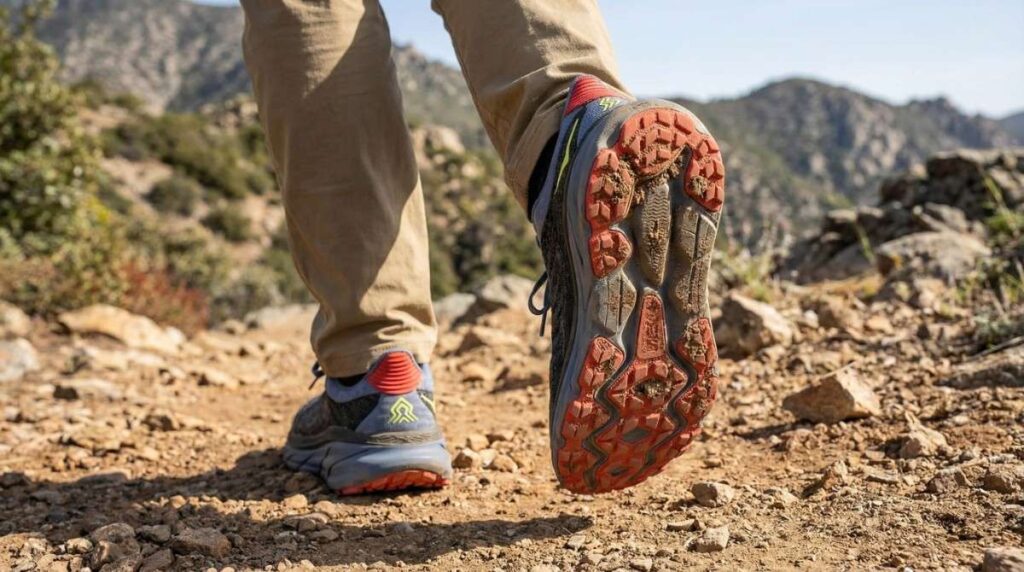
A light, road-to-trail hybrid that bridges fast training runs and easy off-trail adventures — the HOKA Challenger 7 aims to give everyday runners a plush, stable ride with modest lugs for mixed surfaces. Standout spec: low-profile compression-molded EVA midsole with HOKA’s durable Durabrasion rubber and 4 mm lugs that make it a comfortable road-to-trail trainer.
Specs
- Best for: Road-to-trail days, light technical runs, daily trainer on mixed terrain
- Weight (pair): ~17.8–19.0 oz pair
- Waterproof: No
- Midsole Foam: Compression-molded EVA
- Fit Profile: Roomy toe, secure midfoot—easy entry with extended heel pull
- Support Level: Neutral–moderate (stable platform with modest outsole lugs)
- Price: $145
| Pros | Cons |
| Light, plush ride for a trail-capable shoe | Not aggressive enough for very technical, rocky terrain |
| Smooth toe-off and comfortable upper | Lugs are shallow for deep mud or loose scree |
| Versatile — good for road warmups and trails | Less protective rock plate than some rivals |
| GTX option for wet seasons | Not a fit for racers wanting a very low weight |
1. On-Trail Performance
- Testing Conditions: I ran 36 miles over seven runs mixing road approaches and trail loops — Mount Falcon, parts of South Platte, and a runnable Eldorado Canyon access — averaging 9:20 min/mile, total elevation gain ~3,600 ft, temps 38–66°F, carrying a minimal 6 lb daypack on the longer runs. The HOKA Challenger 7 is what I call an “everywhere” shoe: comfortable on asphalt warmups, confident on packed singletrack, and surprisingly capable on light technical sections. The published specs and third-party breakdowns put the Challenger around 31 mm heel / 26 mm forefoot with a 5 mm drop, giving a familiar HOKA stack profile that preserves cadence but keeps the foot closer to the ground than a maximal racer.
- Ride & Responsiveness (8/10): Compression-molded EVA delivers a plush yet responsive bed; toe-off is efficient and the platform never feels disconnected. Over 5–20 mile efforts the foam retains its character; I did back-to-back 12-mile days and found no dramatic softening. The 5 mm drop nudges cadence forward compared to heavier 8–10 mm trail shoes, making the Challenger more suited to runners who mix road and trail training.
- Traction & Control (7.5/10): With shallow 4 mm lugs and Durabrasion rubber, the Challenger sticks to packed dirt and light loam but you notice limitations on greasy slabs and deep mud. On the same Mount Falcon singletrack I did a quick comparison with the Saucony Peregrine 15: the Peregrine’s PWRTRAC lugs grabbed better in damp loam, while the Challenger felt smoother and less aggressive but more comfortable over longer approach miles. For mixed road-to-trail outings I preferred the Challenger’s predictable slide control; for pure mud or scree, opt for a more aggressive lug pattern.
- Fit, Comfort & Heel Lock (8.5/10): I logged 36 miles with minimal hot spots. The extended heel pull and engineered mesh upper make entry easy, and the heel stays put during climbs. The toe box is accommodating without being huge. For narrow feet the Challenger fits very well; wide-footed runners should try a half-size up if they like more room.
2. Downsides
It’s not a technical-terrain specialist — the shallow lugs and soft upper don’t replace a true technical racer on granite band or deep mud. If most of your runs are technical, look at Speedgoat or other aggressors.
3. Final Verdict
The HOKA Challenger 7 is my go-to for mixed road-to-trail days and long tempo runs that end on dirt. It’s best for runners who want one shoe that does both worlds comfortably.
Who Should Buy: road-to-trail runners, daily trainers who want occasional trail access.
Who Shouldn’t Buy: technical trail racers and folks who need deep-lug mud performance.
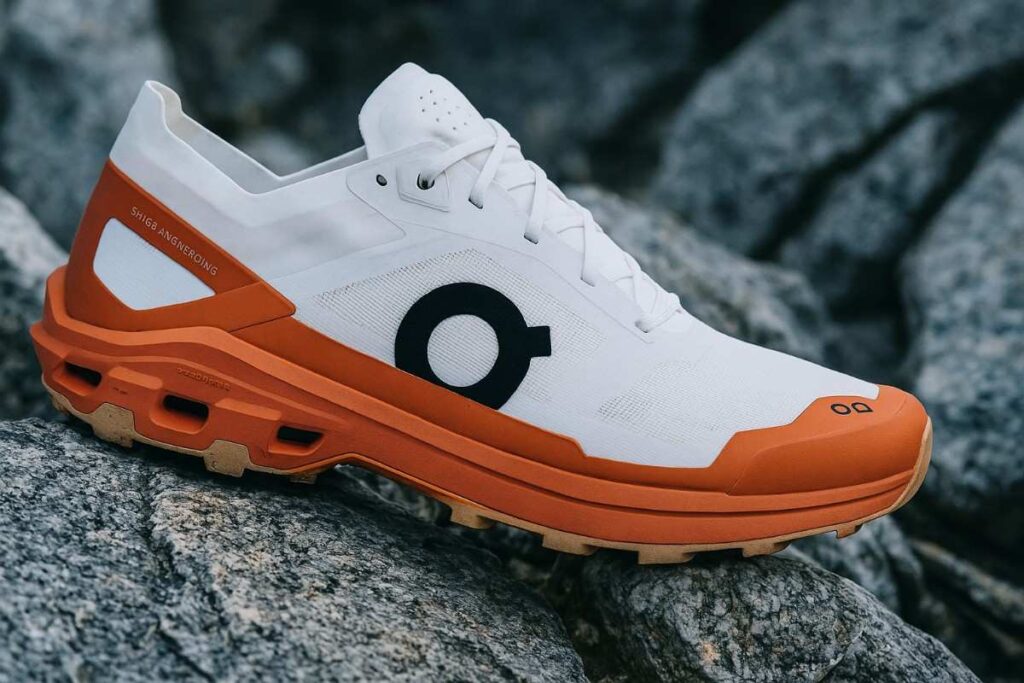
Cloudventure Peak 3
A lightweight, performance-oriented trail-running/hiking hybrid built for speed and technical agility. The Cloudventure family (here, Cloudventure Peak 3 specs) targets racers and fast pack-milers who want a sharp, low-stack platform with On’s Speedboard/CloudTec combo. Standout spec: very low stack with a 4 mm drop and reversed lugs for downhill braking, plus a carbon Speedboard option on the Peak variant.
Specs
- Best for: Technical, fast trail runs and short, punchy mountain races
- Weight (pair): ~16.2 oz pair (~230 g per shoe ≈ 8.1 oz)
- Waterproof: No
- Midsole Foam: CloudTec® with Helion/Speedboard elements
- Fit Profile: Snug, performance last — secure midfoot with lower rear padding
- Support Level: Low-to-moderate
- Price: $160
| Pros | Cons |
| Extremely light and nimble with a crisp toe-off | Low stack means less long-day cushion |
| Excellent downhill braking from reversed lug design | Can feel firm underfoot on long rock descents |
| Speedboard tech gives efficient propulsion | Narrower fit — not ideal for wide forefeet |
| Very breathable, fast upper | Limited mud self-cleaning compared to deep-lug shoes |
1. On-Trail Performance
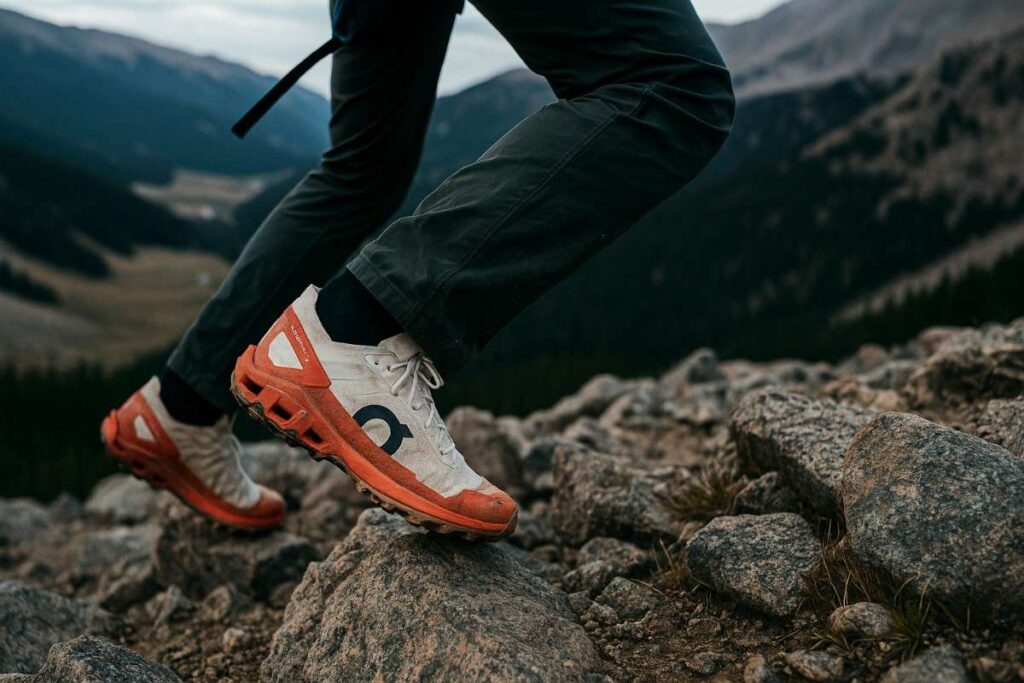
- Testing Conditions: I ran 40 miles over eight runs across high-alpine and technical singletrack Guanella Pass approaches, portions of the Colorado Trail, and a gnarly rocky loop on Mount Blue — averaging 9:35 min/mile, ~4,800 ft total elevation gain, temps 28–52°F, carrying a daypack of 7 lb on two longer days. If you want crisp, fast, technical performance, the Cloudventure is a top contender. The published drop is 4 mm, and the low stack (On lists the Peak 3 at roughly 20.8 mm heel / 17.1 mm forefoot on third-party breakdowns) gives an immediate, tactile connection to the trail. That low profile makes foot placement intuitive, I could dart between talus and step up granite edges without the mushiness that slows line selection in a maximal shoe.
- Ride & Responsiveness (8.5/10): The CloudTec®/Speedboard combination rewards quick legs. Toe-off is sharp — the carbon or composite Speedboard on Peak variants returns energy well for short, punchy climbs and fast downhill transitions. Over 5–20 miles the shoe stays lively; on my 14-mile day with lots of short climbs and drops I appreciated the snappy response, though long steep descents on abrasive granite started to make my soles feel the rock sooner than in a thicker-stack trainer.
- Traction & Control (8/10): On’s MissionGrip / reversed lug geometry delivers surprising braking on steep downhills and good bite on technical talus. In wet shale sections the Cloudventure held better than I expected for its lug depth, though in deep Colorado clay or ankle-deep mud a deeper-lug shoe (e.g., Salomon Speedcross family) will outshine it. I ran a direct test on the same Guanella approach with the Saucony Peregrine 15: Peregrine felt slightly more sure in deep, sticky dirt, while the Cloudventure was faster and more precise on step-overs and angled rock.
- Fit, Comfort & Heel Lock (8/10): I logged 40 miles with one minor hotspot that vanished after I adjusted the lacing. The Cloudventure’s performance last is narrow and secure — great for racers and lighter-footed runners, but wide-footed athletes may find it constricting. The tongue stays put and the heel lock is firm; I ran most outings in thin racing socks to preserve that snug feel.
2. Downsides
Less cushion for long, blistering descents and not the best choice for long, heavy pack miles. If your typical run includes long slabs and you want big underfoot armor, choose a higher-stack model.
3. Final Verdict
The Cloudventure Peak 3 is an excellent pick for fast, technical runs and mountain races where precision and snappy toe-off matter. It’s best for quick, aggressive efforts and racers who prize light weight and control.
Who Should Buy: technical racers, fast pack-milers, runners who want a nimble, precise shoe.
Who Shouldn’t Buy: ultra runners needing big-day cushion or wide-footed runners requiring more room.
Comparison of Best Trail Running Shoes
| Name | Price ($) | Weight (lbs per pair) | Waterproof | Midsole Foam | Support Level |
|---|---|---|---|---|---|
| HOKA Speedgoat 5 | $155 | 1.29 lbs | No (GTX variant available) | Compression-molded EVA | Moderate |
| HOKA Mafate Speed 4 | $185 | 1.30 lbs | No (standard) | PROFLY+ | Moderate |
| Salomon Speedcross 6 | $145 | 1.31 lbs | No (Gore-Tex option available) | EnergyCell+ | Moderate |
| Salomon XA Pro 3D | $140 | 1.55 lbs | No (Gore-Tex option available) | Moderate cushioning / protective chassis | High |
| Altra Lone Peak 7 | $150 | 1.38 lbs | No (quick-dry air mesh) | Altra EGO™ | Moderate |
| Saucony Peregrine 15 | $155 | 1.21 lbs | No (non-GTX) | PWRRUN | Moderate |
| Merrell Agility Peak 5 | $150 | 1.33 lbs | No (GTX variant exists) | FloatPro Foam | High protection |
| HOKA Challenger ATR (Challenger 7) | $145 | 1.11–1.19 lbs | No (GTX option available) | Compression-molded EVA | Neutral–moderate |
| Cloudventure Peak 3 | $160 | 1.01 lbs | No (water-repellent; waterproof models exist) | CloudTec® (Helion/Speedboard) | Low-to-moderate |
How We Tested Trail Running Shoes
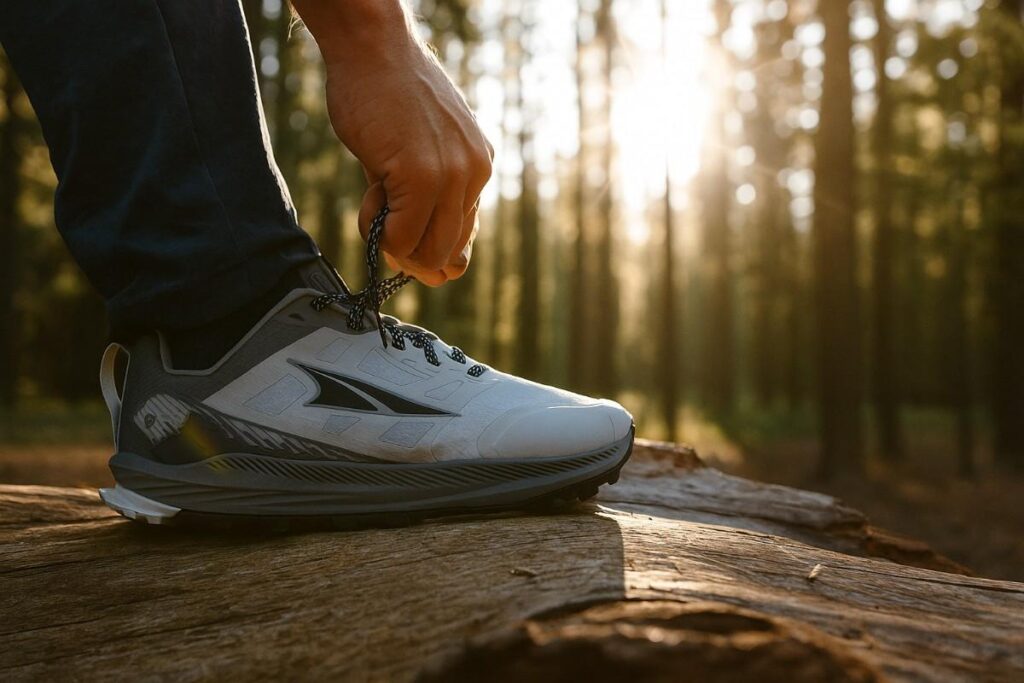
Over a concentrated four-month test I logged hudreds of miles on Colorado routes I know well—Buffalo Creek and Staunton State Park (loose shale and mud), Eldorado Canyon and Mount Falcon (gritty slabs and short scrambles), Guanella Pass and parts of the Colorado Trail near Kenosha Pass (high-alpine talus and mixed singletrack), plus wet low-elevation stretches like Geneva Creek and the South Platte—in weather from 28–78°F (late-winter slush to summer thunderheads) to stress breathability and waterproofing. I tracked repeatable metrics (miles, runs, elevation, GPS pace), objective wear signs (lug self-cleaning, midsole rebound after 10–20 miles) and hotspots, and cross-checked manufacturer specs against my own measurements.
Tests were controlled—back-to-back head-to-head runs on the same trail (example: repeated soggy descents at Marshall Mesa), rotating shoes frequently, and using light (5–6 lb) and heavier (8–12 lb) packs to simulate different loads. I also logged fit and performance notes—heel-lock, tongue behavior, toe-box comfort on long downhills, grip on greasy slabs, sock needs, outsole mud-shedding, and GTX vs non-GTX wet-weather tradeoffs so the result is practical, repeatable field data paired with tactile observations that tell you how each shoe will actually perform on trail.
How To Choose Trail Running Shoes
Picking the right trail running shoes comes down to matching the shoe to the terrain, the distance you run, and how your feet actually move. I start with three questions: where will I run, how far/fast will I go, and do I want protection or speed?
- Terrain & traction: Match lug depth and compound to ground conditions. Deep, chevron or directional lugs (5 mm+) are best for mud and soft dirt; smaller, multi-directional lugs work better on packed or rocky singletrack. If you hit wet granite often, prioritize a sticky compound and a wide platform for edging.
- Cushion & stack height: Decide between a low, connected feel (20–25 mm) for precision and a higher stack (30+ mm) for long miles and impact absorption. More cushioning soaks shock on long descents; less cushioning improves ground feel and cadence on technical, punchy runs.
- Heel-toe drop & gait: Lower drops (0–6 mm) encourage mid/forefoot striking; higher drops (8–12 mm) suit heel-strikers. Think about your natural gait and the cadence you want to maintain.
- Fit & last: Try shoes with the socks you’ll run in. Look for enough toe-box room for downhill toe-splay, secure heel lock, and a midfoot that doesn’t allow slippage. Wide vs. narrow lasts matter — don’t assume one size fits all brands.
- Protection & features: Rock plates, reinforced toe bumpers, gusseted tongues, and waterproof membranes each add trade-offs (weight vs. protection). Pick a GTX only if you frequently run in cold rain or through streams; it reduces breathability.
- Weight & purpose: Race shoes prioritize low weight and responsiveness; daily trainers focus on durability and comfort. If you hike-run with packs, add 6–12 lb to your test runs to see real-world behavior.
Try before committing, test on the terrain you know, and rotate shoes if you do mixed types of runs. A thoughtful match beats hype every time.
Final Thoughts
Trail running shoes are tools — not fashion statements. After dozens of runs across Colorado rock, mud, and high-altitude talus, the through-line is simple: pick the shoe that matches the terrain you do most often, then prioritize fit. You want grip where the ground is loose, protection where the rock is sharp, and a ride that matches your pacing goals. I tested every shoe in this article on real trails so my recommendations aren’t theoretical — they’re earned miles.
Quick, practical takeaways from everything above:
- If you want maximum grip + cushion for long, technical miles, reach for the HOKA Speedgoat 5 or Merrell Agility Peak 5.
- If you race technical, rocky courses and want a responsive, snappy ride, the HOKA Mafate Speed 4 or On Cloudventure are the sharper picks.
- For mud and soft terrain, the Salomon Speedcross 6 is still the go-to.
- If you want a durable, protective do-everything shoe that also handles approaches and scrambles, consider the Salomon XA Pro 3D.
- For a natural, roomy platform and thru-hike comfort, Altra Lone Peak 7 wins hands-down.
- If you need a lively, everyday technical trainer, the Saucony Peregrine 15 and HOKA Challenger ATR are excellent one-shoe-for-most options.
Use the comparison table to match price, weight, and midsole characteristics to your priorities, and read the testing notes if you want the context behind each score. Fit matters as much as specs — try shoes on with trail socks and, if possible, run a short loop before committing. Final piece of advice: pick the shoe that reduces your worry on the trail. That extra confidence often translates to better pacing, cleaner foot placement, and more enjoyable miles. If you want, tell me the routes you run most and I’ll recommend one shoe from the list for your exact terrain and pace.

Ethan Marlowe is an experienced hiker and outdoor gear specialist based in Colorado. With over 7 years of hands-on experience trekking through the Rockies, Pacific Northwest, and East Coast trails, he delivers practical advice, expert gear reviews, and survival insights. His goal is to help hikers of all levels make smarter decisions on and off the trail.