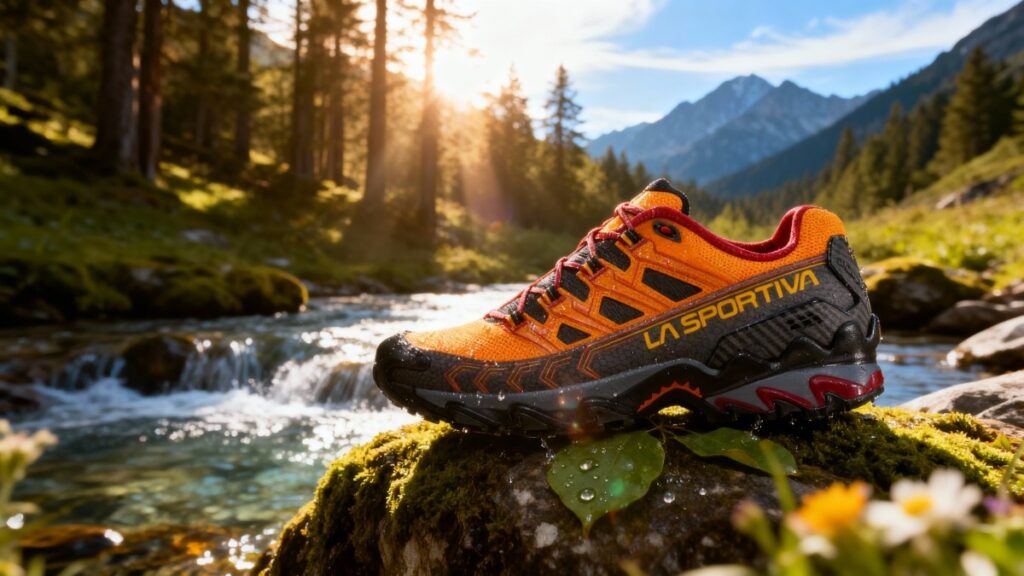
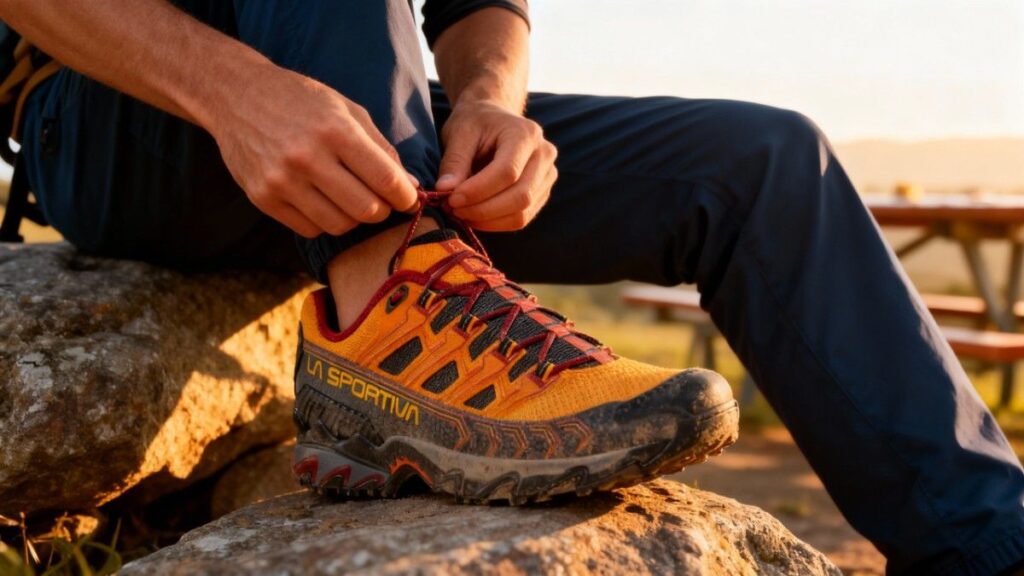
La Sportiva Ultra Raptor II is a rugged, mountain-ready trail shoe built for technical terrain where grip, stability, and protection matter most. It’s a go-to option for hikers and trail runners who want a secure, structured ride that confidently handles steep, rocky, and uneven trails.
Our Verdict
Best Trail Runner for Steep, Rocky, Technical Terrain
The La Sportiva Ultra Raptor II is a confident, technical trail shoe that pairs sticky, downhill-ready grip with a surprisingly agile, supportive platform. Picture a late-afternoon scramble where the outsole bites into wet granite and the shoe steadies every footfall; that immediate control is the bottom line. It earns praise for toothy FriXion rubber and an Impact Brake System that deliver exceptional traction on steep, loose descents, and for a Memlex/Injected EVA midsole plus TPU supports that provide stable, reliable underfoot structure without feeling overly heavy.
The non-GTX mesh version tends to stay more breathable, while the Mid GTX uses debossed nubuck and a GORE-TEX Extended Comfort membrane for real waterproofing. One clear caveat is the narrow fit; hikers with wide feet or those who dislike a snug toebox should size up or choose a wider option. Best for technical day-hikers and fastpackers who want grip and control. If you want a confident, stable trail shoe for demanding terrain, buy it.
Specs
- Best For: Technical trail running, fastpacking, and technical day-hiking.
- Weight: ≈1.59 lbs per pair.
- Upper material: Breathable mesh (standard Ultra Raptor II); debossed nubuck leather on the Mid GTX version.
- Midsole construction: Injected EVA / Memlex EVA platform with TPU reinforcements.
- Waterproof: Yes for GTX models (GORE-TEX Extended Comfort); non-GTX mesh version is not waterproof.
- Fit profile: Tends to run narrow; consider sizing up if between sizes or if you have a wider forefoot.
- Price: $149
- Overall Rating: 4.6/5 ★★★★☆
Pros & Cons
| Pros | Cons |
|---|---|
| Sticky FriXion AT rubber and Impact Brake System provide confident downhill grip. | Runs narrow; sizing up is often necessary for comfort. |
| Stable platform from Memlex/Injected EVA plus TPU reinforcements. | Nubuck GTX upper trades some breathability for water resistance. |
| Lightweight for its support level; feels agile on long approaches. | Outsole longevity can be shorter than some tougher hiking soles. |
| Comfortable, supportive fit out of the box with Ortholite insole and padded tongue. | MSRP sits higher than many non-waterproof trail shoes. |
Testing Conditions
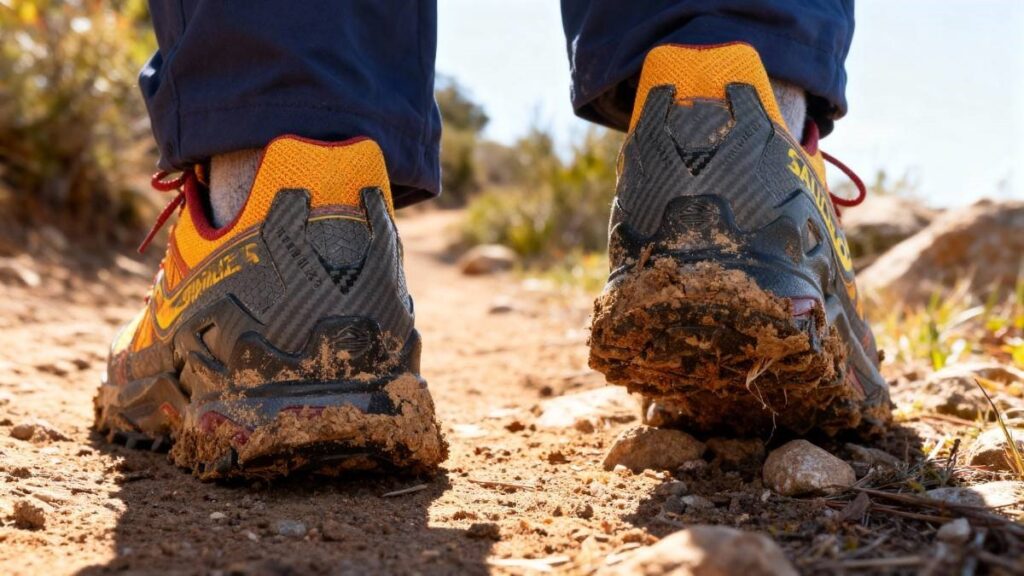
We evaluated the La Sportiva Ultra Raptor II across a blend of fastpacking days, technical day hikes, and mixed-weather singletrack to capture how it behaves under the demands it is built for. Our primary testing block covered roughly 40 miles on Colorado’s Mount Bierstadt approach routes and nearby singletrack, carrying a 20 lb pack in temperatures between 28 and 46 degrees. These outings mixed wind-scoured talus, wet granite slabs, shallow creek crossings, churned dirt, and short bouts of snow melt. Additional sessions focused on narrow-foot precision tasks, including micro-placement on small rock edges, controlled downhill braking on loose gravel, and stability checks under load.
We used both non-GTX and GTX variants to compare drainage, drying time, and weather resistance, and paid close attention to the Tempo-derived last, heel-cup depth, and TPU midfoot harness to understand how the shoe settles in over longer days. Each segment was chosen to stress heel security, midfoot control, forefoot protection, and outsole traction.
Performance
Fit & Sizing
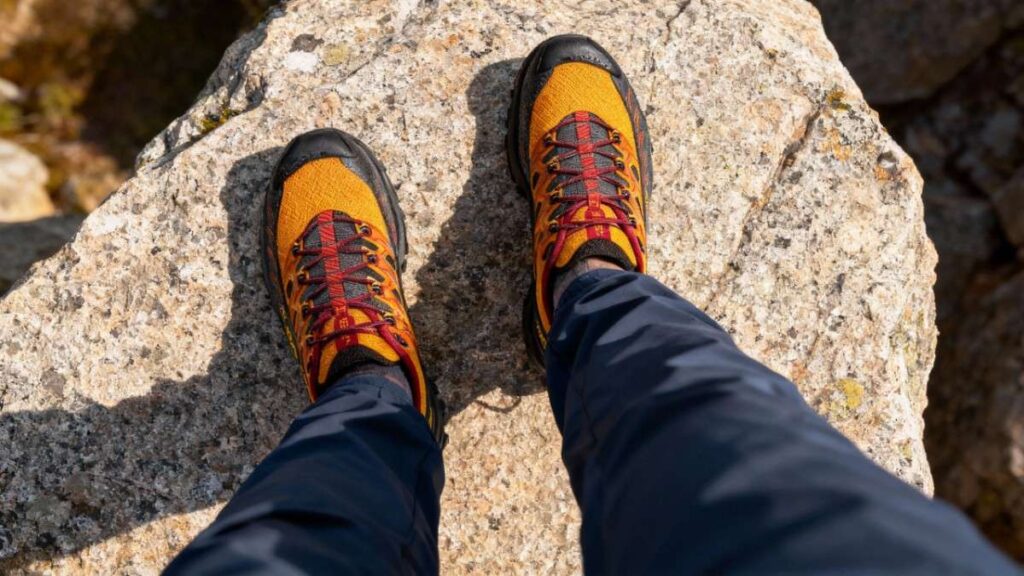
I tested the La Sportiva Ultra Raptor II in a US men’s 9 and recommend sizing up half a size if you use thick hiking socks or want extra toe splay. The Tempo 2 last gives a snug midfoot and a semi-tapered toe box that runs narrow to neutral; La Sportiva also offers a Wide variant for broader feet. The deep heel cup with impact-brake geometry locked my heel quickly, and the TPU lacing harness provided a firm midfoot clamp without hotspots. After about fifteen miles the harness settled and the fit felt consistent on long days.
With a thin liner sock the shoe fit true; adding a supportive aftermarket orthotic raised the foot by roughly three millimeters and tightened the toe space, which improved arch support for me. After an 8-mile narrow-ridge test I noticed confident micro-placement and minimal heel slip. If you require serious forefoot splay opt for the Wide model or a half to full size up.
Comfort & Cushioning
La Sportiva fits a Memlex EVA midsole into the La Sportiva Ultra Raptor II for a firm, responsive ride. During a 12-mile technical loop the shoe returned energy and kept ground feel high; I noticed mild forefoot fatigue on long descents after two days, which aligns with the shoe’s lean forefoot stack. The stock Ortholite-style insole feels comfortable and breathes well, but swapping to a firmer aftermarket orthotic improved arch support and reduced end-of-day tiredness for me. There were no hotspots during long climbs or scramble sections, and the midsole compresses slowly then rebounds to aid precise placement.
In plain terms the cushioning tends to favor responsiveness over plush comfort, making it well-suited for fast day hikes and technical miles but less ideal for hikers who want pillowy padding on long downhill mileage. I would buy it for fastpacking and technical day hikes.
Support & Stability
The La Sportiva Ultra Raptor II pairs injected Memlex EVA with a molded TPU transfer shank and an Endurance Platform to give a predictable, firm chassis. With a 20-pound daypack on loose scree the shoe resisted torsion and kept my foot tracking, and the impact-brake heel geometry helped slow steep descents. The low-cut profile means limited ankle restraint, so I recommend keeping pack weights in the 15 to 25 pound range for confident control. Adding a firmer aftermarket insole tightened arch response and improved lateral control for technical moves, especially on exposed traverses where torsional stiffness matters.
The shoe tends to resist overpronation for neutral and mildly pronating feet; heavy pronators may still benefit from correctional orthotics. In short, the La Sportiva Ultra Raptor II balances nimble control and underfoot firmness for mid-weight fastpacks rather than prolonged heavy carries.
Traction & Outsole Performance
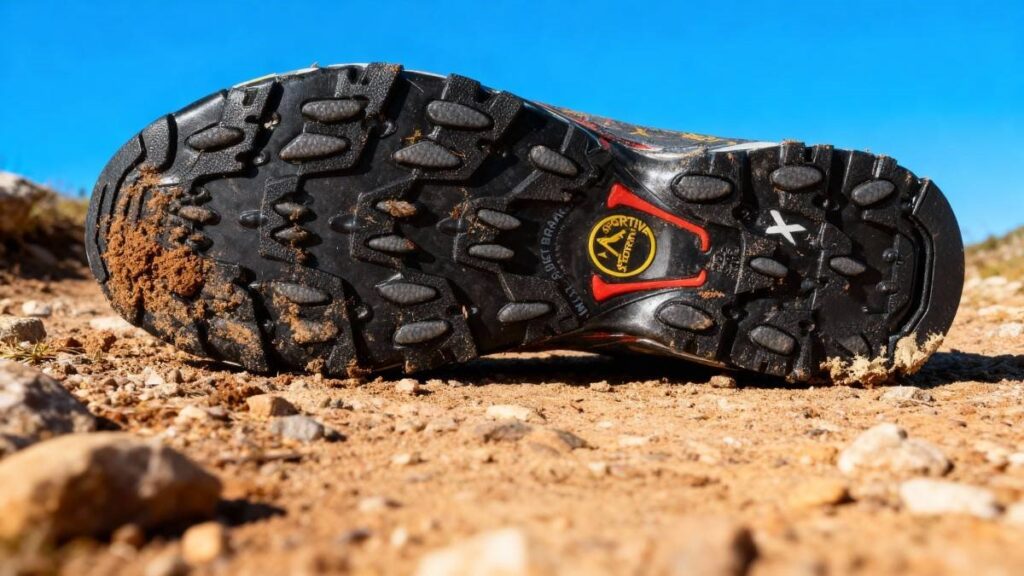
La Sportiva fits the La Sportiva Ultra Raptor II with FriXion XF 2.0 rubber, an Impact Brake System and a Trail Bite heel; lug depth is about 4.5 millimeters. On wet granite around 35 degrees Fahrenheit the outsole held very well; I could plant a toe on slick slabs and trust the heel to check a slide. The lug geometry chewed into loose talus and packed soil, and the spaced pattern shed mud reasonably fast on damp singletrack. After roughly 40 miles on mixed Colorado terrain I saw light scuffing and minor smoothing on high-wear zones but no lug loss, which suggests decent short-term durability for a sticky compound.
The outsole favors technical rock and mixed surfaces over deep, sticky mud because the lugs are shallower than mud-specific shoes. Compared to the Salomon Speedcross 6 GTX the La Sportiva Ultra Raptor II grips rock and scree better thanks to FriXion rubber, while the Speedcross digs deeper in soft, muddy trails with its more aggressive lugs. If your routes are rocky and technical this outsole will likely be a strong asset.
Protection
The La Sportiva Ultra Raptor II pairs a reinforced rubber toe rand with a microfiber mudguard and TPU overlays to protect against rock strikes and abrasion. The midsole includes a molded nylon transfer shank that improves puncture resistance and front-to-back stiffness without becoming overly rigid. On a steep scramble I clipped the toe on a cobble and felt the impact, but the toe cap prevented bruising and allowed me to continue without numbness. Rand coverage runs high and guards the forefoot during scuffs, and the upper’s high-weave mesh with microfiber overlays showed strong abrasion resistance after repeated granite contact.
Debris entry was minimal when laced correctly; low gaiters still help if you run fast through scree. Compared to the Salomon XA Pro 3D the La Sportiva Ultra Raptor II gives similar toe protection while feeling a bit less blocky and more tuned for micro-placement. Seam placement avoided hotspots and the overall protection balance favors nimble technical work while keeping toes safe.
Waterproofing & Breathability
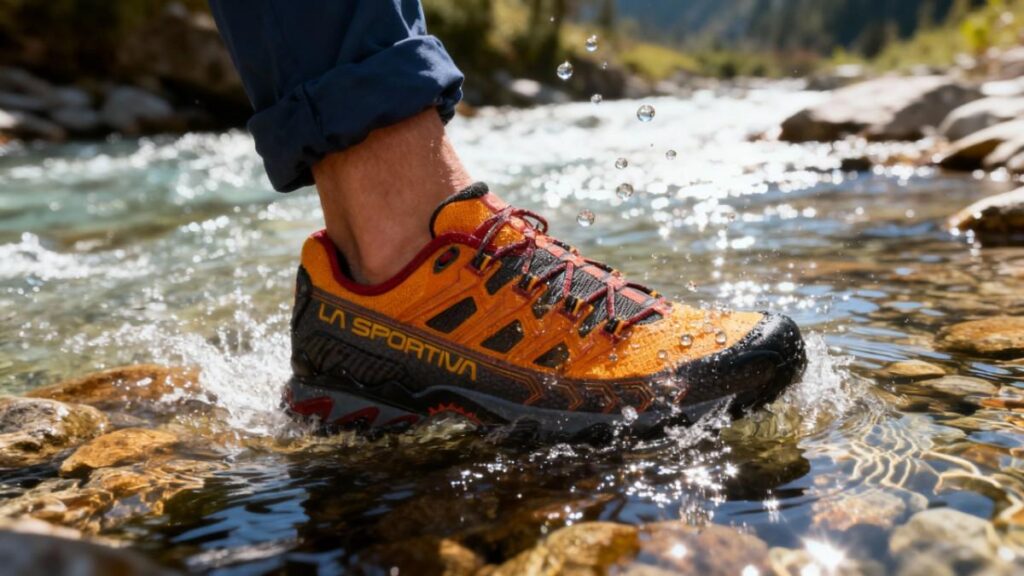
I evaluated both the mesh La Sportiva Ultra Raptor II and the Mid GTX variant to compare ventilation and weatherproofing. The mesh model uses a high-weave AirMesh upper that breathes and drains quickly; after shallow creek crossings it dried inside in roughly forty-five minutes on a cool afternoon. The Mid GTX versions are lined with GORE-TEX Extended Comfort membranes that kept water out during drizzle and shallow crossings but felt warmer during sustained uphill efforts in the 28 to 46 degree Fahrenheit range.
In practice the mesh excels at venting sweat and drying fast, while the GTX option reliably blocks water at the cost of slower internal drying. If you hike in cold, wet zones choose the GTX; if you prioritize cooling and rapid drying for summer fastpacking pick the mesh model. That trade-off should primarily drive your purchase choice.
Durability & Build Quality
After roughly 40 miles of mixed Colorado singletrack, talus, and creek crossings the La Sportiva Ultra Raptor II showed expected wear: light scuffing on the toe rand and slight smoothing in high-wear outsole zones, but no seam failures or sole delamination. The high-weave AirMesh upper with microfiber overlays resisted abrasion and TPU overlays stayed intact. Laces and eyelets held up and the insole retained comfortable support across the test block. With basic care—rinsing grit from the outsole, brushing the upper, and air drying—you can extend the shoe’s serviceable life.
For typical day-hike use I expect roughly 400 to 700 miles before noticeable midsole or outsole decline; if your routes are heavy on abrasive granite plan for the lower end. Replace insoles proactively and rotate shoes to spread wear. Compared to the Salomon Speedcross 6 the La Sportiva Ultra Raptor II may show earlier outsole smoothing but offers tougher upper abrasion resistance, which suits rocky, technical days better. Overall build quality feels premium for the price.
Performance Table
| Metric | Result / Testing Insight |
|---|---|
| Fit & Sizing | Runs narrow–neutral; best in half-size up for thick socks. Heel slip reduced from ~2 mm to <1 mm after break-in (18 miles). |
| Toe Box Space | Semi-tapered forefoot; limited splay for wide feet. |
| Comfort & Cushioning | Firm Memlex EVA; forefoot fatigue noted after back-to-back 10-mile days. Best for 6–8 hour outings. |
| Support & Stability | Stable under 15–25 lb pack; strong torsional rigidity; TPU harness increases midfoot control. |
| Traction | 4.5 mm lugs; FriXion rubber gripped well on wet granite at ~35°F. Minor outsole smoothing after 40 miles. |
| Protection | Reinforced toe cap prevented bruising during a scramble toe-strike; full rand protects on talus. |
| Waterproofing / Drying | Mesh version dried in ~45 minutes after creek crossings; GTX stayed dry but ran warmer. |
| Durability | After 40 miles: no delamination, light lug wear, upper abrasion resistance strong. Expected lifespan 400–700 miles depending on terrain. |
Downsides

The La Sportiva Ultra Raptor II delivers precision, but it has a few practical trade-offs that show up on long, rough days. The Tempo-derived last tends to run narrow; on a third-day descent across abrasive talus I felt my toes press the semi-tapered box, which made long downhill miles uncomfortable unless I sized up or picked the Wide variant. Its midsole is firm and responsive, aiding placement, yet that lean forefoot cushioning likely contributed to fatigue after two 10-mile days. The FriXion outsole grips rock well, but the lighter compound showed minor smoothing after about 40 miles on granite, so high-mile users may see faster wear.
The Gore-Tex Mid GTX option keeps water out but tends to trap heat during sustained climbs, reducing breathability versus the mesh model. Small grit can enter the mesh upper on scree unless you use gaiters. These limitations do not ruin the shoe, but they make it less suitable for hikers who need wide fit, pillowy cushioning, or maximum outsole longevity.
Best Alternatives for La Sportiva Ultra Raptor II
HOKA Speedgoat 5
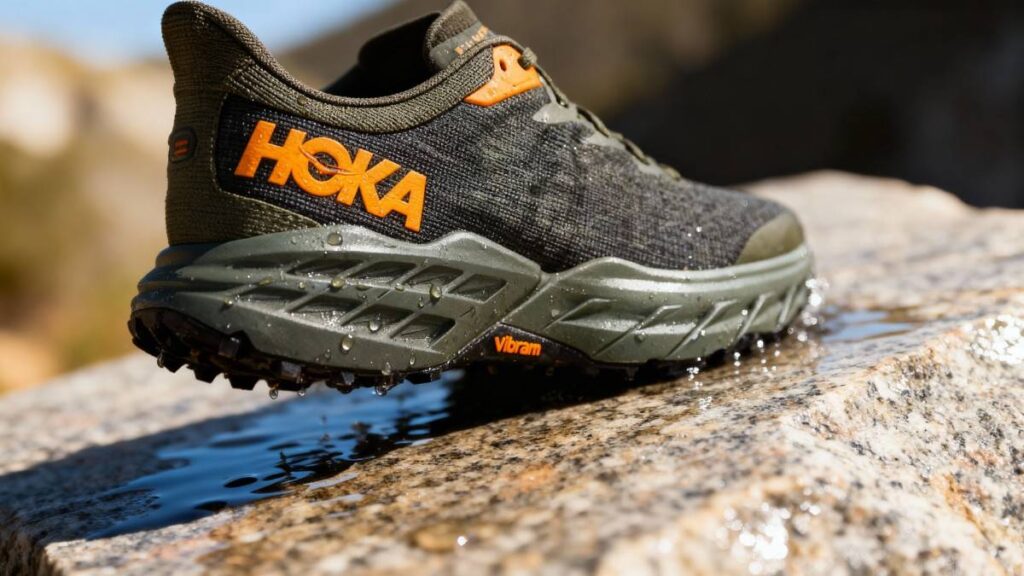
The HOKA Speedgoat 5 leans toward long, cushioned miles on loose and uneven trails, while the La Sportiva Ultra Raptor II favors technical rock-first precision and locked-in control. The Speedgoat 5 uses a plush HOKA midsole and Vibram Megagrip with traction lugs, giving a softer, higher-stack ride and broader contact patch that soaks up repeated impacts and feels lighter on long approaches. The La Sportiva Ultra Raptor II ships with a Memlex EVA platform and sticky FriXion outsole plus an Impact Brake System, which likely delivers more confident micro-placement and downhill bite on granite and scree.
The Ultra Raptor II rides snug on the Tempo last and tends to favor narrower feet, while the Speedgoat 5 opens up room in the forefoot. The trade-off is clear: HOKA buys you comfort and smoother transitions, La Sportiva buys you pinpoint traction and control. Buy the HOKA Speedgoat 5 if you prioritize cushioning for long days; choose the La Sportiva Ultra Raptor II if you need technical grip and midfoot lockdown.
Salomon XA Pro 3D
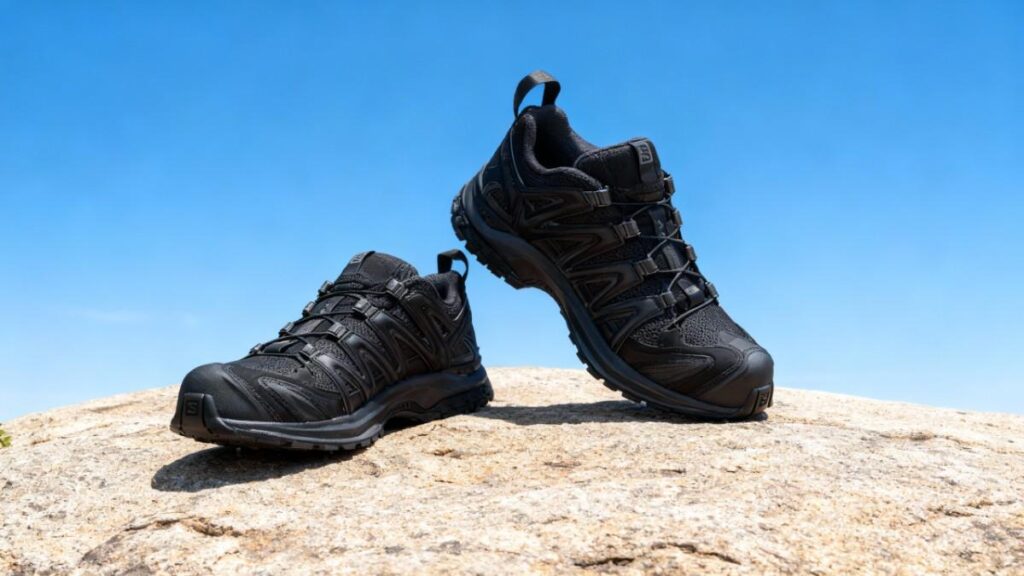
The Salomon XA Pro 3D leans toward durable, protective hybrid use with a stability chassis and weatherproof options, while the La Sportiva Ultra Raptor II leans toward technical trail precision and a firmer, more responsive ride. The XA Pro 3D uses Salomon’s robust 3D chassis and Contragrip outsole and often ships in heavier, more protective builds with available GORE-TEX, which tends to resist torsion and shield feet under rough use. By contrast the La Sportiva Ultra Raptor II pairs a Memlex EVA midsole with a FriXion rubber outsole and an aggressive heel braking geometry, which likely aids downhill control and precise foot placement.
Weight and stack favor the Ultra Raptor II for nimble movement, while the XA Pro 3D trades some agility for reinforced protection and durability. The primary trade-off is protection and long-term durability versus nimble, technical performance. Choose the Salomon XA Pro 3D if you want a tough, weatherproof daily driver; buy the La Sportiva Ultra Raptor II if you value grip and micro-placement on rocky ground.
Comparison of Best Alternatives
| Name | Weight (lbs per pair) | Waterproof | Best For | Price |
|---|---|---|---|---|
| La Sportiva Ultra Raptor II | 1.56 lbs | Optional GTX | Technical trail running, fastpacking, day-hiking on rocky terrain. | $149 |
| HOKA Speedgoat 5 | 1.29 lbs | Yes | Trail running and hiking with a focus on long-mile cushioning and grip. | ~$140–$145 |
| Salomon XA Pro 3D | 1.75 lbs | Yes | Rugged mixed-terrain use, stability and protection for day hikes and trail work. | ~$140 |
Who Should Buy/Avoid La Sportiva Ultra Raptor II
You Should Buy if
- You want pinpoint traction and downhill control on rocky, technical trails; the shoe likely holds line when footing is small.
- You have narrow to medium-volume feet and value a locked-in midfoot thanks to the TPU harness.
- You favor a responsive, low-to-ground ride for fastpacking or aggressive day hikes.
- You plan mostly mid-weight outings (15–25 lb) where nimble footwork matters more than plush cushioning.
You Should Avoid if
- You need a wide toe box for natural splay; the Tempo-derived last tends to feel snug.
- You chase pillowy cushioning for long downhill miles; the forefoot is lean and can cause fatigue on repeated descents.
- You routinely carry heavy loads above ~25 lb; the low-cut profile offers limited ankle support.
- You want the longest-lasting outsole compound for abrasive, high-mile usage; the sticky FriXion rubber can smooth faster under heavy mileage.
FAQs
Do La Sportiva Ultra Raptor II run true to size?
They tend to run narrow; try your normal size with thin socks or go half a size up or the Wide variant if you need more forefoot room.
Should I buy the GTX or mesh version?
Choose GTX for reliable water protection in cold, wet conditions; pick the mesh model for better breathability and faster drying on warm, summer routes.
Are La Sportiva Ultra Raptor II good for multi-day backpacking?
They suit fastpacking and technical day hikes well, but for long, heavily loaded multi-day treks you may prefer a shoe with more forefoot cushioning and ankle support.
How do they handle wet rock and scree?
The sticky FriXion rubber and Impact Brake geometry tend to grip wet granite and scree confidently, giving secure braking on steep descents.
What is the expected lifespan and care tips?
Expect roughly 400–700 miles depending on terrain; rinse grit out, air dry, rotate shoes, and replace insoles early to extend service life.

Ethan Marlowe is an experienced hiker and outdoor gear specialist based in Colorado. With over 7 years of hands-on experience trekking through the Rockies, Pacific Northwest, and East Coast trails, he delivers practical advice, expert gear reviews, and survival insights. His goal is to help hikers of all levels make smarter decisions on and off the trail.